
Index
- Introduction
- Key Exchanges: BSE & NSE
- How Trading Works
- Market Indices: Sensex & Nifty 50
- SEBI — The Market Regulator
- Types of Markets: Primary & Secondary
- Key Participants in the Indian Stock Market
- Getting Started as a Beginner in India
- Risks to Understand Before You Invest
- Conclusion
- Open a Demat + Trading Account
What is the Stock Market and How Does It Work in India?
 By Admin
|
Mar 31, 2026
|
1 min read
|
110
|
🤍
0
By Admin
|
Mar 31, 2026
|
1 min read
|
110
|
🤍
0
The stock market is an organised marketplace where buyers and sellers come together to trade shares of publicly listed companies. When a company needs to raise capital, it sells a portion of its ownership — in the form of "shares" or "stocks" — to the public. Investors who buy these shares become part-owners, or shareholders, of that company.
In India, the stock market is one of the most powerful wealth-creation tools available to ordinary citizens. Over the past two decades, the Indian equity market has delivered average annual returns that consistently outpace fixed deposits and traditional savings instruments.
The stock market is a device for transferring money from the impatient to the patient.
— Warren Buffett, legendary investor
Key Exchanges: BSE & NSE
India has two major national stock exchanges where the bulk of trading activity takes place:
| Feature | BSE Bombay Stock Exchange | NSE National Stock Exchange |
|---|---|---|
| Founded | 1875 — Asia's oldest exchange | 1992 — Fully automated from day one |
| Location | Dalal Street, Mumbai | BKC, Mumbai |
| Benchmark Index | SENSEX (top 30 companies) | NIFTY 50 (top 50 companies) |
| Listed Companies | ~5,500+ | ~2,000+ |
| Trading Volume | Lower daily volumes | Highest in India (globally top 3) |
| Speciality | SME platform, more listings | Derivatives & futures market leader |
💡 Did You Know?
The BSE was established in 1875 under a banyan tree on Dalal Street — making it Asia's oldest stock exchange and one of the oldest in the world. Today, it processes millions of trades electronically in milliseconds.
How Trading Works
Modern stock trading in India is entirely electronic and highly regulated. Here is a step-by-step flow of how a trade gets executed from the moment you press "buy" to when shares arrive in your account:
Investor Places an Order
You log into your broker's app (Zerodha, Groww, Angel One, etc.) and place a buy or sell order for a specific stock at a specific price.
Order Reaches the Exchange
Your broker routes the order to the NSE or BSE order-matching engine, which matches buy and sell orders at compatible prices in microseconds.
Trade Execution & Confirmation
Once matched, a trade is executed. You receive an instant confirmation through your broker's platform, and an official contract note is generated.
Clearing via NSCCL / ICCL
Clearing corporations (NSCCL for NSE, ICCL for BSE) act as the counterparty to every trade, guaranteeing settlement even if one party defaults.
Settlement — T+1
India moved to T+1 settlement in 2023 — among the fastest in the world. Shares are credited to your Demat account and funds are settled within one business day after the trade date.
Market Indices: Sensex & Nifty 50
A market index is a statistical measure that tracks the performance of a group of stocks. Think of it as a "pulse" or "thermometer" of the overall market. India has two headline indices:
📊 BSE SENSEX
The S&E&N&S&E&X (Sensitive Index) tracks the 30 largest and most actively traded companies on the BSE. Launched in 1986, it is India's oldest and most widely quoted index. A Sensex rise signals broad market optimism.
📈 NSE NIFTY 50
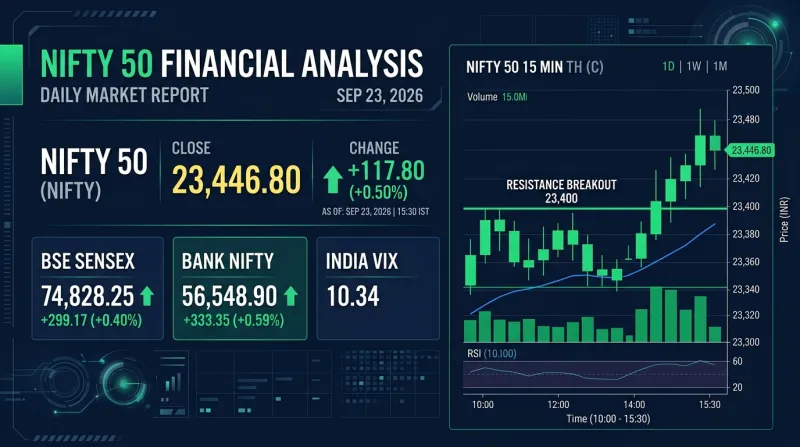
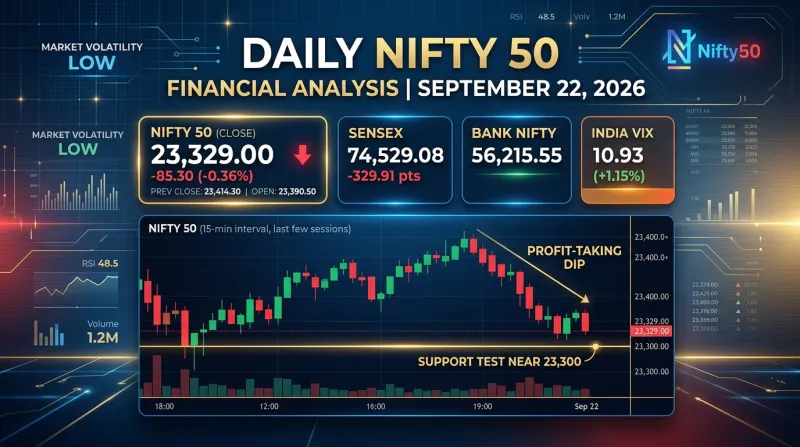
The Nifty 50 tracks the 50 largest companies on the NSE across 13 sectors. It is the preferred benchmark for institutional investors, mutual funds, and index funds due to its broader diversification.
🏦 NIFTY Bank
Tracks the 12 most liquid and large-capitalised banking stocks on NSE. It is the most actively traded index derivative in India and is a key indicator of financial sector health.
🏭 Nifty Midcap 150
Tracks mid-sized companies that represent the next rung of India's growth story. Midcap indices have historically outperformed large-caps over long investment horizons with higher volatility.
SEBI — The Market Regulator
The Securities and Exchange Board of India (SEBI) is the apex regulatory body overseeing India's securities markets. Established in 1988 and given statutory powers in 1992, SEBI's mission is to protect investor interests, promote market development, and regulate securities markets.
Regulator of Indian Capital Markets
Securities and Exchange Board of India (SEBI)
SEBI is to India's stock market what the RBI is to banking — the primary authority ensuring transparency, fairness, and investor protection across all market activity.
Investor ProtectionRegulates disclosures, prevents fraud, and maintains an investor grievance redressal mechanism accessible to all retail investors.
Exchange OversightLicenses and supervises stock exchanges (BSE, NSE), depositories (NSDL, CDSL), and clearing corporations.
Broker RegulationRegisters and monitors all stockbrokers, sub-brokers, merchant bankers, and portfolio managers.
IPO ApprovalsReviews and approves company prospectuses before public listings to ensure complete and accurate disclosure to investors.
Types of Markets: Primary & Secondary
Primary Market
The primary market is where companies first sell their shares to the public through an Initial Public Offering (IPO). The money raised goes directly to the company to fund expansion, pay off debt, or other corporate purposes. When Zomato, Paytm, or LIC went public, they did so through the primary market.
Secondary Market
Once shares are listed on an exchange after an IPO, they trade between investors in the secondary market — this is what most people mean when they refer to "the stock market." The company receives no money from secondary market trades; the proceeds go entirely to the selling investor.
🔁 Other Market Segments in India
Beyond equities, India's financial markets also include: the F&O (Futures & Options) market for derivatives trading; the currency derivatives market; the commodities market (MCX for gold, silver, crude oil); and the debt market for government and corporate bonds.
Key Participants in the Indian Stock Market
The stock market functions through a complex ecosystem of participants, each playing a distinct role:
🏢 Listed Companies
Corporates that have offered shares to the public via an IPO and are listed on the BSE or NSE for ongoing trading.
🏦 Institutional Investors
Mutual funds, insurance companies, pension funds, and foreign portfolio investors (FPIs) who deploy large capital.
👤 Retail Investors
Individual investors — like you and me — who trade stocks through broker platforms using their Demat and trading accounts.
🔄 Stockbrokers
SEBI-registered intermediaries (Zerodha, Upstox, ICICI Direct) who provide platforms and execute trades on behalf of investors.
Getting Started as a Beginner in India
Investing in the Indian stock market has never been more accessible. Here is the complete path for a first-time investor:
Get Your PAN Card
A Permanent Account Number (PAN) is mandatory for all investment activity in India. Apply online via the NSDL or UTI portal if you don't already have one.
Complete KYC
Know Your Customer (KYC) verification requires your PAN, Aadhaar, a selfie, and a signature. Most modern brokers allow fully digital KYC in under 15 minutes.
Open a Demat + Trading Account
A Demat account holds your shares electronically (via NSDL or CDSL depositories). A Trading account is used to place orders. Popular choices: Zerodha, Groww, Upstox, Angel One.
Fund Your Account
Transfer money from your linked savings account via UPI, NEFT, or IMPS. There is no minimum balance required to open an account.
Start with Index Funds or Blue-chips
For beginners, low-cost Nifty 50 index funds or established large-cap companies are a safer starting point before exploring individual stock picking or F&O trading.
Risks to Understand Before You Invest
The stock market offers exceptional long-term wealth creation potential, but it carries real risks that every investor must understand:
📉 Market Risk
Stock prices can fall due to macroeconomic factors, geopolitical tensions, or global events — as seen during COVID-19 in 2020 when the Sensex fell over 38% in weeks.
🏭 Company-specific Risk
Poor earnings, management scandals, or regulatory issues specific to a company can cause its stock to collapse independently of the broader market.
💱 Liquidity Risk
Small-cap and penny stocks may have very few buyers, making it difficult to sell shares quickly at a fair price without impacting the market price.
😰 Emotional Risk
Fear and greed are an investor's worst enemies. Panic-selling during dips and overbuying during rallies are the most common mistakes that erode long-term returns.
Risk comes from not knowing what you are doing. Educate yourself before you invest a single rupee.
— Adapted from Warren Buffett
Conclusion
The Indian stock market is a dynamic, well-regulated, and increasingly accessible ecosystem that enables millions of Indians to participate in the country's economic growth story. From the historic floors of Dalal Street to instant mobile trades, the market has evolved dramatically — but its core purpose remains unchanged: connecting companies that need capital with investors seeking returns.
Whether you are a salaried professional wanting to beat inflation, a student building early wealth, or a retiree seeking income through dividends — the stock market offers a vehicle suited for every investor profile, provided you invest with knowledge, patience, and a clear understanding of risk.
Start small, stay consistent, keep learning, and remember: the Indian economy is one of the fastest-growing in the world. As it grows, patient and informed investors are well-positioned to benefit.
Financial & Regulatory Disclaimer
InvesTalks provides stock market analysis, equity research, and financial content strictly for educational and informational purposes only. We are not a SEBI-registered investment advisor or portfolio manager. Market investments are subject to market risks. Always perform your own research or consult a certified SEBI-registered financial advisor before making buy/sell decisions.
Admin
Equity Research & Financial AnalysisCurated by the InvesTalks financial analysis team. Dedicated to providing disciplined stock market insights, technical chart evaluations, and long-term investor education.
 Market News & Outlook
Login to comment.